Is It Fair to Have a Toll Road Without a Bypass? A Case for Equity in Liberia’s Infrastructure Policy
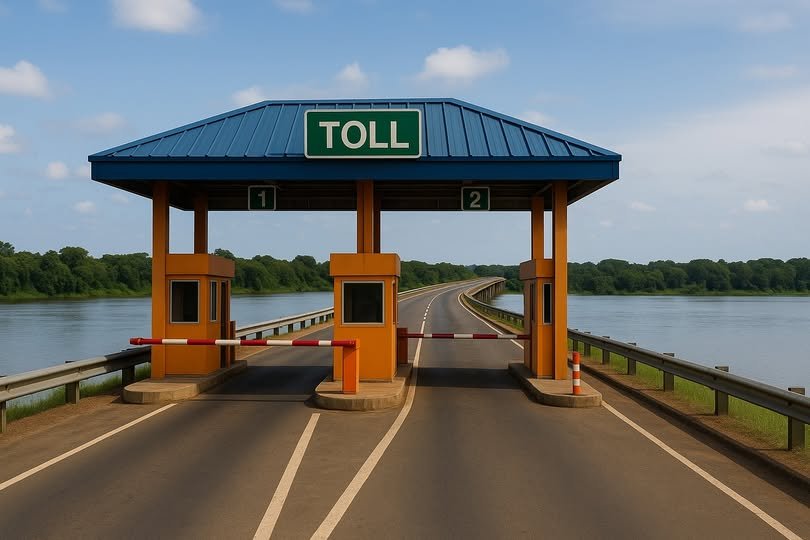
Toll roads are often presented as signs of progress, modern highways, faster travel, and private-sector investment that eases the burden on government budgets. Yet, behind this glossy image lies a fundamental question of fairness: Is it justifiable to impose tolls on citizens without providing an alternative, free route, or bypass for those who cannot afford to pay?
By George H Nubo
Toll roads are often presented as signs of progress, modern highways, faster travel, and private-sector investment that eases the burden on government budgets. Yet, behind this glossy image lies a fundamental question of fairness: Is it justifiable to impose tolls on citizens without providing an alternative, free route, or bypass for those who cannot afford to pay? In Liberia, where the Pavifort Toll Road project has become a subject of debate, this question deserves urgent public scrutiny.
1. The Principle Behind Toll Roads
In principle, tolling is a reasonable concept. Governments or private companies invest heavily in building and maintaining roads, and tolls are a way to recover those costs. In theory, those who benefit most from the road are motorists who enjoy smoother, faster travel and contribute directly to its upkeep.
However, this model only works fairly when it respects the principle of choice. A toll road is legitimate if travelers can freely choose between a paid expressway and a non-tolled public alternative. The latter ensures that mobility remains a fundamental right, not a privilege reserved for the wealthy.
International best practice supports this principle. Across Africa, countries like Ghana, Kenya, and South Africa ensure that tolled expressways have free parallel roads or older routes maintained by the state. The idea is not simply to provide people with a “cheap option,” but to safeguard public access and economic freedom.
2. When There Is No Bypass
When a toll road becomes the only viable passage, the toll ceases to be a voluntary payment; instead, it becomes a compulsory tax on movement. This situation raises serious equity and ethical questions, especially in a country where large portions of the population live below the poverty line.
Without a bypass, residents are forced to pay tolls even for short, essential trips, such as farmers taking produce to nearby markets, teachers commuting to schools, or ambulances rushing to hospitals. What should be routine movement within communities becomes an economic burden.
In the case of the Pavifort Toll Road Project in Liberia, many citizens are asking whether the road design and contract include provisions for a public bypass. The absence of such a route effectively creates a monopoly, with one company controlling access to an essential public artery. Even if the toll fee seems small on paper, its cumulative effect on local livelihoods can be significant.
3. Economic and Social Impacts
Tolling without an alternative hits hardest at the base of the economic pyramid. Market women, motorcyclists, and rural farmers often travel multiple times a day. Even a modest toll of $2 per trip can amount to $60 a month, which is an enormous cost in rural Liberia.
Moreover, toll roads without bypasses can drive up the price of basic goods. Transportation costs are passed on to consumers, resulting in higher prices for rice, oil, vegetables, and other essential goods. In effect, the poor subsidize the profits of a private concessionaire.
There are also social implications. Toll gates can divide communities, separate families and restricting access to essential services such as schools, clinics, and farmlands. If road policy is not carefully designed, it can create new inequalities rather than bridging existing ones.
4. The Legal and Policy Perspective
Liberia’s Constitution and the Land Rights Act both emphasize public ownership of natural and infrastructural resources. While the government may enter public-private partnerships (PPPs) for development, such arrangements must serve the “greatest good for the greatest number.”
Public infrastructure, especially roads, falls under this principle. The Ministry of Public Works and the National Road Fund have mandates to ensure equitable access to transportation. Any tolling arrangement that denies public access to a non-tolled road risks violating the spirit of those mandates.
Additionally, in PPP frameworks recommended by the World Bank and the African Development Bank, toll roads must include public-service obligations, such as exemptions for emergency vehicles, discounted passes for residents, or explicit provisions for a bypass. Without these, the project is not only unfair but potentially non-compliant with international standards.
5. Governance and Transparency Issues
Another layer of concern is transparency. Was the Pavifort Toll Road agreement made public? Were the terms debated by the Legislature or subject to an environmental and social impact assessment (ESIA)? These are not minor procedural questions: they determine whether the project genuinely serves public interest.
When contracts are negotiated behind closed doors, without public consultation, communities lose trust. Citizens have a right to know whether toll revenues will be reinvested in road maintenance, local development, or absorbed by private profits.
In the absence of transparency, the toll becomes more than a user fee, it becomes a symbol of exclusion and an emblem of elite-centered governance.
6. The Human Dimension: Fairness and Dignity
Fairness is not only an economic principle: it is also a moral one. Roads connect people to opportunities, to one another, and to the services that define a dignified life. When mobility becomes conditional upon payment, the poor are effectively excluded from their own country’s infrastructure.
Consider a farmer who needs to take cassava to a nearby town but must pay a toll each time he crosses the gate. If the profit from his produce barely exceeds the toll cost, his effort becomes futile. Multiply that by hundreds of villagers, and what you see is not development; instead, it is quiet exploitation masked as modernization.
The question, then, is not whether toll roads are good or bad, but whether they are fair. Development must be inclusive, not extractive.
7. Alternatives and Remedies
If the government or a private company insists on a toll road without a bypass, specific compensatory measures should be mandatory:
– Resident Exemptions: Local inhabitants who live within 10–15 km of the toll gate should receive free or discounted passage.
– Transparency of Revenue Use: A clear framework must ensure toll revenues are reinvested in maintaining the road and developing affected communities.
– Public Oversight: A joint oversight committee of local leaders, civil society, and government should monitor toll operations and report annually.
– Social Impact Mitigation: The project must include social infrastructure: markets, rest stops, and roadside clinics along the corridor to demonstrate tangible public benefit.
– Progressive Review Mechanism: The toll fee should be periodically reviewed against inflation, income levels, and maintenance needs to avoid overcharging.
These measures do not replace a bypass, but they mitigate the injustice of its absence.
8. Conclusion: The Road to Equity
A toll road without a bypass is, in essence, a road without fairness. It privatizes access to mobility and shifts the burden of infrastructure financing onto those least able to pay. If Liberia’s goal is equitable development, every road policy must reflect the values of inclusion and justice.
The Pavifort Toll Road project may bring modern infrastructure to the country, but modernization should never come at the cost of people’s dignity and right to movement. As Liberia rebuilds its infrastructure, it must also rebuild public trust, and that begins with ensuring that every toll road has a free, safe, and well-maintained alternative route for all citizens.
Until that is achieved, the toll will remain not just a fee, but a question mark hanging over the fairness of our development choices.