PHP-Redemption Park: The Park of Infamy
On 12 April 1980, President William R. Tolbert was assassinated, ending the First Republic’s 133-year history. The gunman remains unidentified four decades later. Ten days after that assassination, on 22 April 1980, the unthinkable followed: thirteen high-ranking officials of the Tolbert government, convicted in a military kangaroo court, were stripped to their underwear and marched through the streets of Monrovia to a beachfront known as PHP, behind the military barracks. There, by firing squad, in public, they were executed as the world watched.
“Those who cannot remember the past are condemned to repeat it.” — George Santayana
J. Patrick Flomo
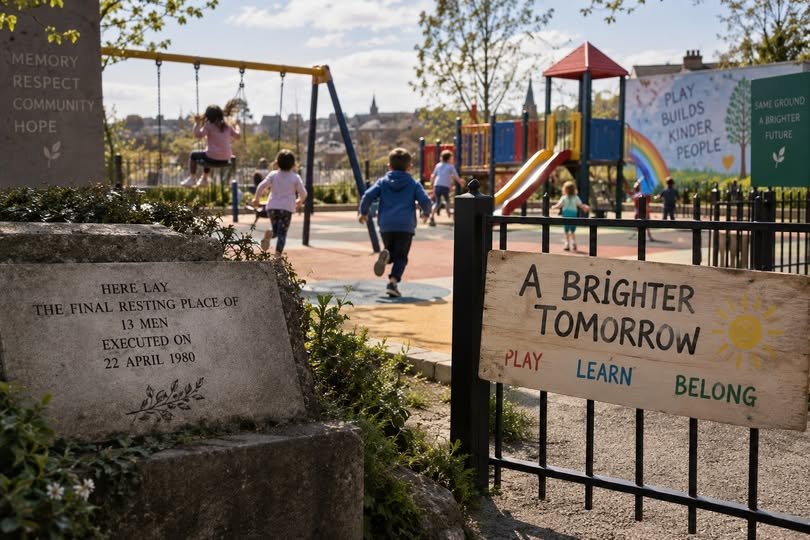
Rather than being a Requiem to the historical testimony of the FINAL RESTING PLACE of the 13 men executed on 22 April 1980, the site should be a PLAYGROUND.
I. The Execution
On 12 April 1980, President William R. Tolbert was assassinated, ending the First Republic’s 133-year history. The gunman remains unidentified four decades later. Ten days after that assassination, on 22 April 1980, the unthinkable followed: thirteen high-ranking officials of the Tolbert government, convicted in a military kangaroo court, were stripped to their underwear and marched through the streets of Monrovia to a beachfront known as PHP, behind the military barracks. There, by firing squad, in public, they were executed as the world watched.
For those unable to comprehend the barbarity of what they were witnessing, it was a scene of disbelief. For the families, relatives, and friends of the condemned, it was a scene of agony — the unanswerable question of what these thirteen men could possibly have done to deserve this. And for the downtrodden elements of society who had suffered under the old order, it was, by grim contrast, a scene of exuberance. Three reactions to a single act of state violence, none of them reconcilable with the others — and none of them reconcilable with what has since been done to the ground on which it happened.
II. The Site as Evidence
That ground — soaked in the blood of thirteen men — was not consecrated. It was not marked. It was built over. In place of a monument that might have stood as testimony for generations, the government of President George Weah authorized a playground on the very site of the most horrific public execution in twentieth-century Liberian history.
There is no more precise example of historical erasure than converting a site of state killing into a children’s playground. It is not neglect. Neglect leaves a place empty, waiting to be reckoned with. This was an act of substitution — replacing the memory owed to the dead with the noise of the living, as if daily use of the ground could out-shout what happened on it. A century from now, when the last eyewitnesses have died and the facts have gone soft with retelling, this substitution is what will remain: a playground with no plaque, asking no visitor to remember anything at all.
Against this backdrop, the name given to the surrounding development — “Redemption Park” — is difficult to read as anything but ironic. By its biblical sense and its dictionary sense alike, redemption means atonement, the setting-right of a wrong. Building a playground over an unmarked mass grave is not redemption. It is its opposite.
III. What the 2025 Reburial Admits
In 2025, the government dedicated a new mausoleum and memorial park for the thirteen men — not at PHP, but at the Liberia Baptist Theological Seminary, a different site entirely.
This decision deserves to be read carefully, because it does something the government may not have intended: it concedes the very case this essay is making. A state does not relocate remains and build a memorial for men it considers having been justly executed. The reburial is, in effect, an admission — that these men were wrongly killed, and that their treatment merited correction. But an admission made this way, at a remove from the scene of the crime, corrects nothing. It relieves the government of confronting PHP itself, while still allowing it to claim the moral credit of memorialization. If these men were wronged — and the reburial says they were — then their families are owed more than a mausoleum in a different neighborhood. They are owed reparation and an official apology, offered plainly, in reference to what happened and where it happened.
IV. Three Administrations, One Pattern
Look at this across the three presidencies it has touched, and a pattern emerges that is more damning than any single decision.
The family and friends of the executed appealed to President Ellen Johnson Sirleaf to preserve PHP itself as the men’s final resting place — an appeal documented in Gerald Barclay’s film on the assassination and its aftermath. She declined. The irony is hard to overstate: a president who belonged to the same class of Liberians as the men executed chose not to preserve the one site that could have told their story truthfully.
President Weah then went further than omission — he physically transformed the site, building over it and foreclosing the possibility that a future government could still consecrate it.
President Boakai, inheriting both the desecrated site and the opportunity to correct it, chose neither to reclaim PHP nor to leave the matter unresolved. He designated an entirely different location as the men’s final resting place — a decision that lets the government appear to honor the dead while permanently walking away from the ground where they died. Omission, desecration, redirection: three different failures, in sequence, each making the last one harder to undo.
V. What We Owe
We who are living carry the obligation to set the events of 22 April 1980 into their proper historical context — not the sanitized context of a playground with no marker, and not the deflected context of a memorial built somewhere else, but the actual context of PHP itself. The first mass execution of state officials in Liberia’s twentieth-century history should remain memorialized where it happened, for as long as remembering it can still serve as a warning against traveling that road again.