Soldiers Accused of Abusing a Civilian Should Face Military Justice Under Liberia’s Uniform Code of Military Justice
The decision by the High Command of the Armed Forces of Liberia (AFL) to dishonorably discharge two soldiers following the physical abuse of a civilian woman in Thinkers Village, Paynesville, deserves public commendation. It demonstrates an important commitment to military discipline, professional accountability, and the protection of civilians against the abuse of military authority.
By Seltue Robert Karweaye Sr.
Policy Analyst, Security Expert, and Researcher
The decision by the High Command of the Armed Forces of Liberia (AFL) to dishonorably discharge two soldiers following the physical abuse of a civilian woman in Thinkers Village, Paynesville, deserves public commendation. It demonstrates an important commitment to military discipline, professional accountability, and the protection of civilians against the abuse of military authority.
However, while the decisive action taken by AFL Chief of Staff Major General Davidson Forleh sends a powerful message, administrative dismissal alone must not be mistaken for the full administration of military justice.
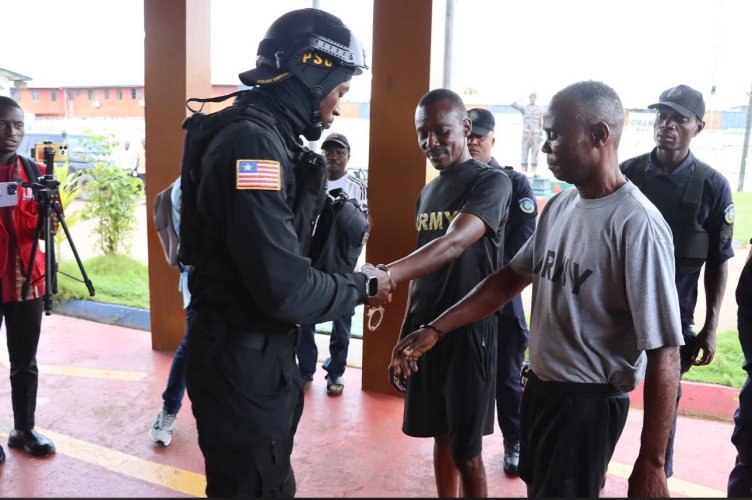
Sergeant Robert P. Menyon and Sergeant Abu S.B. Sheriff of the AFL’s 23rd Infantry Brigade were reportedly discharged on October 21, 2026, following a viral video showing the physical mistreatment of Blessings Kpalleh, a young civilian woman.
According to the reported circumstances, the soldiers abandoned their assigned duties to intervene in a private disagreement involving Sergeant Menyon’s girlfriend. What should have remained a minor civilian dispute allegedly escalated into an unacceptable demonstration of military intimidation and physical violence.
Such conduct violates the fundamental principles of professionalism, restraint, discipline, and respect for civilian authority upon which a modern democratic military institution must operate.
Major General Forleh and the AFL High Command therefore deserve recognition for refusing to tolerate misconduct simply because the perpetrators wore military uniforms.
Nevertheless, an important legal and institutional question remains: Why were the soldiers immediately transferred to the Liberia National Police for criminal investigation instead of first being subjected to the applicable military justice procedures under Liberia’s Uniform Code of Military Justice (UCMJ)?
THE NATIONAL DEFENSE ACT OF 2008 MUST BE MORE THAN A DISCIPLINARY REFERENCE
Liberia’s National Defense Act of 2008 provides the statutory framework governing the organization, administration, discipline, and accountability of the Armed Forces of Liberia.
The military justice framework established under that Act is intended to ensure that members of the armed forces remain accountable to the laws and professional standards governing military service.
The reported decision to discharge the two soldiers under Section 7.7 of the National Defense Act addresses their continued suitability for military service. However, administrative separation and criminal accountability are fundamentally different legal processes.
Administrative dismissal removes an individual from military service. Military prosecution determines whether a service member committed an offense punishable under military law and, where guilt is established, imposes the appropriate punishment.
Discharging a soldier is an administrative consequence. Prosecuting a soldier for an alleged military offense is a judicial process. One should not automatically substitute for the other.
The AFL High Command must therefore clarify whether the allegations were examined under the applicable provisions of Liberia’s military justice framework before the soldiers were discharged and transferred to civilian authorities.
WHY MILITARY JUSTICE MATTERS
The alleged misconduct raises serious questions extending beyond the physical abuse of a civilian.
The reported unauthorized departure from assigned duties, misuse of military status in a private dispute, failure to report misconduct, and conduct prejudicial to military discipline may each warrant examination under applicable military regulations and military law.
These are not merely questions of ordinary civilian criminal conduct. They concern the integrity of the military chain of command, obedience to lawful orders, and the professional responsibilities of soldiers entrusted with the defense of the Republic.
Where the law permits, such allegations should be investigated and prosecuted through the appropriate military justice mechanisms, including court-martial proceedings when legally warranted.
This does not mean soldiers should escape civilian criminal accountability.
Assault against a civilian may constitute an offense under Liberia’s ordinary criminal laws. The Liberia National Police and civilian courts therefore have legitimate responsibilities where civilian criminal jurisdiction applies.
However, the existence of civilian criminal jurisdiction should not become an excuse for abandoning applicable military justice procedures.
The military and civilian justice systems serve related but distinct purposes. Civilian criminal law protects the public against unlawful violence, while military law additionally protects discipline, command responsibility, operational readiness, and the integrity of the armed forces.
The appropriate jurisdiction must be determined according to the National Defense Act, applicable military justice provisions, and Liberia’s constitutional guarantees of due process. The AFL should not assume that transferring discharged soldiers to the police automatically satisfies every obligation arising from their alleged military misconduct.
ADMINISTRATIVE DISMISSAL IS NOT THE SAME AS A COURT-MARTIAL CONVICTION
The public must also understand an important legal distinction.
A discharge described administratively as dishonorable should not automatically be equated with a dishonorable discharge imposed as punishment following a lawful court-martial conviction.
The legal basis, procedures, and consequences of each action must be established.
Military justice cannot depend entirely on the discretion of commanders, regardless of how commendable their intentions may be.
Professional armed forces operate through established legal procedures, not public humiliation or administrative punishment alone.
The public disrobing of the soldiers may have communicated the military’s condemnation of their alleged actions, but the lasting institutional achievement would be demonstrating that military personnel are held accountable through transparent, consistent, and legally defensible procedures.
THE TREATMENT OF THE SOLDIERS’ FAMILIES ALSO DESERVES REVIEW
Another troubling aspect of the reported disciplinary action concerns the immediate eviction of the soldiers’ families from the Edward Binyah Kesselly Barracks.
While discharged personnel may lose eligibility for military accommodation, their spouses and children should not automatically become subjects of punitive treatment for misconduct they did not commit.
Ordering families removed immediately and transporting their belongings to the Samuel Kanyon Doe Sports Complex raises legitimate questions about administrative fairness, reasonable notice, and humane treatment.
Military discipline must be firm, but it must never become collective punishment.
The AFL can enforce its housing regulations without unnecessarily exposing innocent family members, particularly children, to humiliation or hardship.
A professional military institution must demonstrate discipline not only in punishing wrongdoing but also in respecting the dignity and legal rights of everyone affected by its decisions.
COMMENDING THE AFL WHILE DEMANDING STRONGER INSTITUTIONAL ACCOUNTABILITY
The AFL High Command deserves additional recognition for publicly apologizing to Blessings Kpalleh and her family and offering medical treatment through the 14 Military Hospital.
These measures reflect an important acknowledgment that the armed forces have a responsibility to protect civilians rather than intimidate them.
However, the victim’s access to medical treatment should not replace her right to pursue appropriate legal remedies, including compensation where legally justified.
Likewise, the soldiers must receive the due process protections guaranteed by law. Public outrage, even when justified by disturbing video evidence, cannot replace a lawful determination of individual criminal responsibility.
The most important lesson from this incident is that military accountability must be institutional rather than merely symbolic.
Liberia has invested substantial resources and international assistance in rebuilding the AFL into a professional, disciplined, and constitutionally accountable national defense institution following years of conflict.
That investment must be protected through the consistent application of military law.
The AFL should therefore clarify the military offenses potentially implicated by the incident, explain whether military justice proceedings were initiated or legally available, and establish why referral to civilian authorities was considered the appropriate course.
Where military jurisdiction remains legally available, the relevant offenses should be addressed through military justice procedures. Where discharge has terminated such jurisdiction, the authorities should explain that limitation and ensure that lawful civilian proceedings continue.
CONCLUSION: DISCIPLINE MUST BE ROOTED IN LAW, NOT PUBLIC SPECTACLE
Major General Davidson Forleh and the AFL High Command deserve commendation for demonstrating that military uniforms do not place soldiers above accountability.
Their swift condemnation of the alleged abuse sends an important message that the Armed Forces of Liberia must never become an instrument of intimidation against the very citizens they are sworn to protect.
Nevertheless, Liberia must move beyond the symbolism of disrobing soldiers before cameras.
The real test of military professionalism is not how quickly a commander removes a uniform, but how faithfully the institution applies the law governing those who wear it.
The National Defense Act of 2008 and Liberia’s applicable Uniform Code of Military Justice must remain central to military discipline and accountability.
Administrative dismissal should never be treated as an automatic substitute for military prosecution where military law requires or permits such proceedings.
Neither should civilian criminal prosecution be dismissed where the alleged conduct violates Liberia’s criminal laws.
The objective must be lawful accountability through the appropriate jurisdiction, not punishment for public consumption.
A professional army does not merely dismiss soldiers who violate its standards. It ensures that alleged violations are investigated, prosecuted where warranted, and resolved through the rule of law.
That is the standard Liberia must demand from its Armed Forces.
That is the standard required to strengthen public confidence in military institutions.
And that is the standard upon which a disciplined, democratic, and professional Armed Forces of Liberia must stand.