More Money, Same Imbalances: Liberia’s 2027 Spending Plan
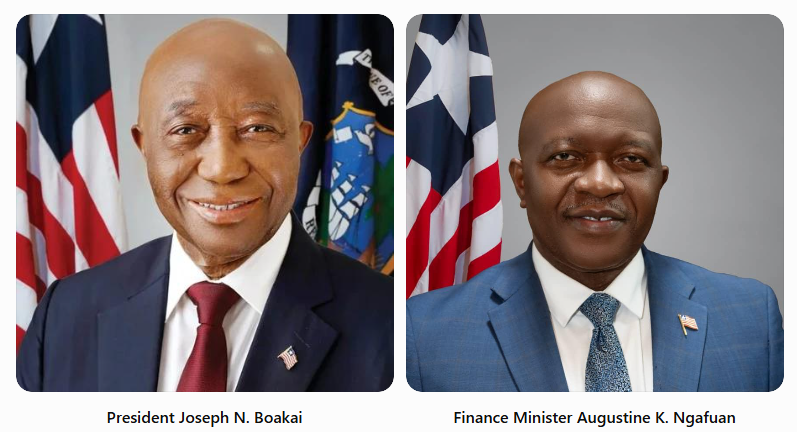
The US$1.54 billion budget for 2027 is the largest budget that Liberia has ever presented. On paper, this is a positive move. After years of fiscal tightening, Liberian officials are forecasting more domestic revenue and a greater allocation to health, education, and government salaries. Finance Minister Augustine Ngafuan calls it a “growing budget for bigger impact.” However, the numbers tell a different story.
Editorial
The Perspective
The US$1.54 billion budget for 2027 is the largest budget that Liberia has ever presented. On paper, this is a positive move. After years of fiscal tightening, Liberian officials are forecasting more domestic revenue and a greater allocation to health, education, and government salaries. Finance Minister Augustine Ngafuan calls it a “growing budget for bigger impact.” However, the numbers tell a different story.
Health will receive a significant increase in the budget. It will total about US$136 million, up from about US $111 million in the previous year. Education will increase, from around US$163-164 million. Money will be spent on finishing construction at New Redemption Hospital, some medical equipment for JFK Medical Center and renovations at the University of Liberia. Thousands of public employees will get salary increases. These are important changes for a country that still has to import essential medicines for its hospitals and teachers have long been complaining about their salaries. 94 percent of the budget will be domestically sourced, which is a positive step away from a dependence on donors.
In terms of the spending priorities, there are many questions about the budget. For instance, the budget for debt repayment is projected to be US$275.5 million. This amount is more than twice the entire health budget and far more than what is allocated to agriculture. Approximately one in five dollars of domestic revenue will go to paying creditors, such as local banks and the Central Bank. This is not a choice. Debts must be paid. But when debts are growing so rapidly and critical productive sectors remain underfunded, it leaves no room for the kind of investment that could actually boost the economy and, over time, pay off the debts.
Agriculture is the most significant issue. The sector that employs the majority of Liberians and is vital to food security receives a minimal allocation, around 1.2 percent of the budget according to some reports. This is in sharp contrast to African Union agreements to increase the budget for agriculture. The social protection program for the poorest of the poor looks meager when compared with other budget allocations such as the Legislature, security and administrative costs. A much-discussed article pointed out that the fuel budget for the legislature was greater than the national medicine budget in some areas. Whether or not all these comparisons are accurate, it is evident that funds are flowing to the Capitol, debt, and security than to farms, rural health centers, and the poor.
A hidden risk in this budget is revenue. In 2026, revenue was strong because of the one-off payment from the mining sector. However, this payment will not be available in 2027. The government is hoping that revenue will be raised through growth, improved tax collection, and the new VAT system. These are all reasonable expectations, but they are not guarantees. If revenue does not match the budget, the first thing that will be cut will be capital expenditure and the very services the budget seeks to protect.
Execution is also a key issue. For many years, Liberia has not fully spent its capital budget. The country has allocated money for hospitals and schools but has not yet built them and equipped them. With better project management and accountability, the country may fail to turn out positive results from more funding on paper.
In the end, this budget is a clear case of a country with large debts trying to make it work. The increases in health and education are welcome. The increase in domestic revenue is important. However, the disproportionate amount of money allocated to debt payments, limited support for agriculture, and continued emphasis on recurrent and institutional spending all suggest that “bigger impact” is still a wish and not a reality. The people of Liberia will not be judged by the size of the budget but rather by whether there is medicine in the clinics, the teachers are paid on time, the roads are maintained, and farmers receive any support. The 2027 budget proposal has a lot to prove on that front.