Liberia’s US$1.538 Billion Budget: Where Will the Money Come From, Who Will Benefit, and Who Will Account for Its Spending?
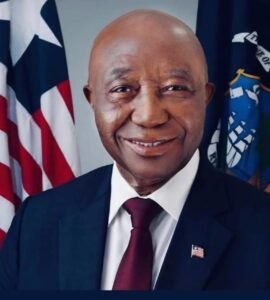
President Joseph Nyuma Boakai has proposed a budget of $1.538 billion for the 2027 fiscal year, which includes increasing spending on healthcare, education, infrastructure and salaries to government workers. But where is the money coming from? How have the previous budgets been spent? Will people see an improvement in their lives?
Editorial
The Perspective | November 6, 2026
President Joseph Nyuma Boakai has proposed a budget of $1.538 billion for the 2027 fiscal year, which includes increasing spending on healthcare, education, infrastructure and salaries to government workers. But where is the money coming from? How have the previous budgets been spent? Will people see an improvement in their lives?
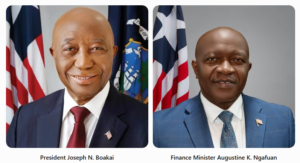
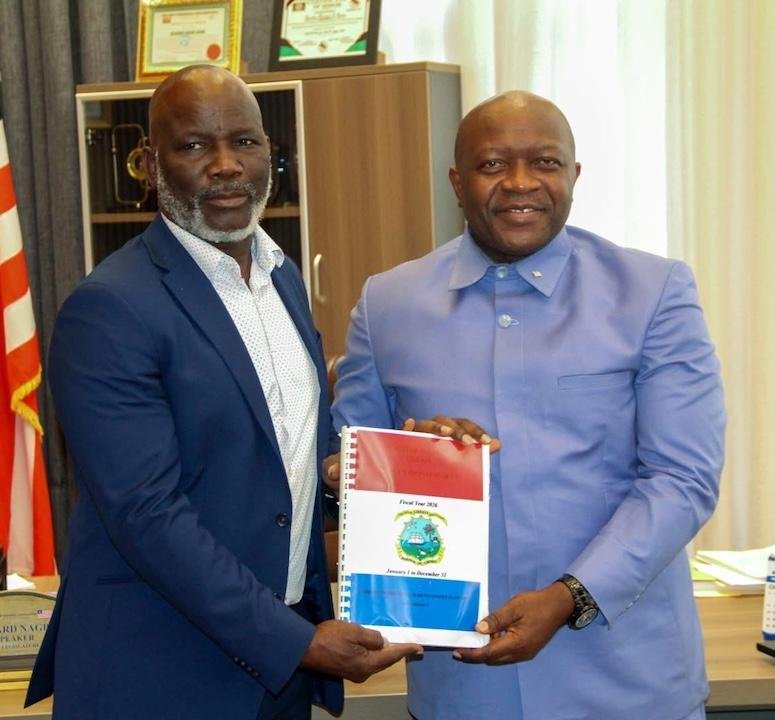
The proposed budget was presented to the Speaker of the House of Representatives, Richard Nagbe Koon on Friday by the Finance Minister, Augustine Kpehe Ngafuan. The budget was submitted when the government was celebrating domestic revenue collection, which had reached a total of more than US$1 billion by September 2026. This was when the finance minister had previously warned that the exceptional revenue of about US$200 million in 2026 would not be recurring in 2027.
While the administration promises a more substantial budget that will have more impact, it’s not yet clear how much development money will be available to Liberia’s fifteen counties, how projects that were funded will be completed, and how the government will pay back nearly $60 million in debts to the National Social Security and Welfare Corporation.
For the ordinary Liberians who still face crumbling roads, ill-equipped hospitals, underdeveloped schools, and little economic opportunity, it is not about the size of the budget, but how it will be accounted for and how it can prove that the nation’s rising revenue is helping the country grow beyond Monrovia’s sanctuaries of power.
What Happened to the 2026 Budget?
Before the Liberian people celebrate any new increase in government spending, they need to know how the money set aside in the budget for this year has been used, what has been completed, and what remains to be accomplished.
The Ministry of Finance cannot be satisfied by the simple statement that Government agencies have been credited with the amounts allocated to them, because the release of money does not imply that hospitals are being equipped, roads are being built, schools renovated, and that communities are receiving the services for which the State budget provides.
Reports should be published indicating how much was allocated, how much spent, and how much has been completed, so that the people can see clearly government expenditure and government results.
What Will Counties Receive?
One of the more vexing omissions from the November 6 budget announcement was the absence of a breakdown showing how much development money will reach Liberia’s 15 counties. This is important, especially to those counties that have historically been neglected in terms of infrastructure and public investment.
While the government has allotted US$1 million for the Engineering College at William V. S. Tubman University and US$750,000 for Grand Kru Technical College, these figures do not indicate the extent of the broader development needs in Maryland, Grand Kru, River Gee and Grand Gedeh counties, for example.
To what extent does the budget cover J.J. Dossen Hospital, Harper Port, rural roads, bridges, agricultural development, and other essential projects in Maryland County, and how would these investments benefit our neighbors to the southeast?
These people shouldn’t have to read complex government documents to find out if their communities have been included in the national development priorities or not, because a genuinely inclusive national budget must clearly indicate the sites of the major projects, their budget, and the duration of the planned works.
Are We Financing Development or Expanding Government Payrolls?
Boakai’s offer to increase the salaries of nearly 13,000 existing employees of the state and to employ approximately 4,350 additional ones is a strong commitment, especially to teachers, medical staff and security personnel, who have long complained about inadequate wages.
However, increasing salaries without correspondingly increasing expenditure on equipment, on material, on public works, on equipment for public services, would leave the country still faced with a large part of the same problems, despite the increase of public expenditure.
A higher salary alone will not help a schoolteacher; she still needs her books and a properly equipped classroom, just as a higher salary in medicine cannot improve the quality of treatment, or cure the sick, if there are no medicines, diagnostic apparatus or essential instruments.
Legislature must therefore define what share of the US$1.538 billion should go for salaries, the expenses of administration, the debts contracted, and productive development investments, ensuring that the growth of salaries does not come at the expense of the essential services and the public works.
Who Will Account for the US$60 Million NASSCORP Debt?
Another important piece of information in the president’s speech is that the state owes the National Social Security and Welfare Corporation nearly US$60 million, the accumulated and unremitted employer’s share of several years.
The government promises to pay regular contributions from 2027 on, while paying off the backlog of debt. But it doesn’t say how much the government would like to pay each year, how long the arrangement should last, or what safeguards are to be put in place against running into debt again.
But this is not a mere governmental accounting matter, because the financial security of retired and retiring public servants is directly dependent on the administration of the social security system. It is therefore important for legislature to demand a clear remittance plan and a transparent public disclosure of the payment data.
Liberia Needs Results, Not Just Bigger Budgets
The proposed national budget of US$1.538 billion offers an opportunity for strengthening public institutions and expanding development, but its success will depend on the ability of the administration to show that the expected revenues are realistic, the budgetary administration is controlled, and that the investment promises actually to achieve the intended results.
Successive administrations have given their Liberian people promises of improved roads, modern hospitals, schools, agricultural development and employment. Yet many Liberian communities still face the same problems which previous budgets were supposed to solve.
The 55th Legislature has the responsibility to examine the budget, demand the detailed breakdown by county, monitor the use of previous budgets, and exercise effective control of public funds rather than simply giving routine approval to the budget.
Boakai’s administration should welcome these questions as an opportunity to demonstrate its commitment to transparency, for responsibility in government is not measured by the magnitude of its promises, but by its willingness to account for public funds and to show results.
The farmer who is unable to sell his produce because of bad roads, the patient who has no medicine at the hospital because of lack of money, the pupil who goes to school in a shabby school, and the retired civil servant who fears for his pension: for them, the announcement of a US$1.538 billion budget will mean very little unless it produces real improvements in their lives.
Yes, Liberia needs an increase in the size of its national budget, but that must be done through a transparent, accountable, and development-oriented budgeting program that delivers measurable benefits to ordinary citizens regardless of where they live.
The US$1.538 billion budget will remain just a promise until the government provides convincing answers about where the money will come from, who it will benefit, and how every major expenditure will be accounted for.